01 — History5 min
Why Pasadena fell for midcentury
A city built on Arts and Crafts craftsmanship was primed for the warm, wood-and-glass modernism of the 1950s.
Read story →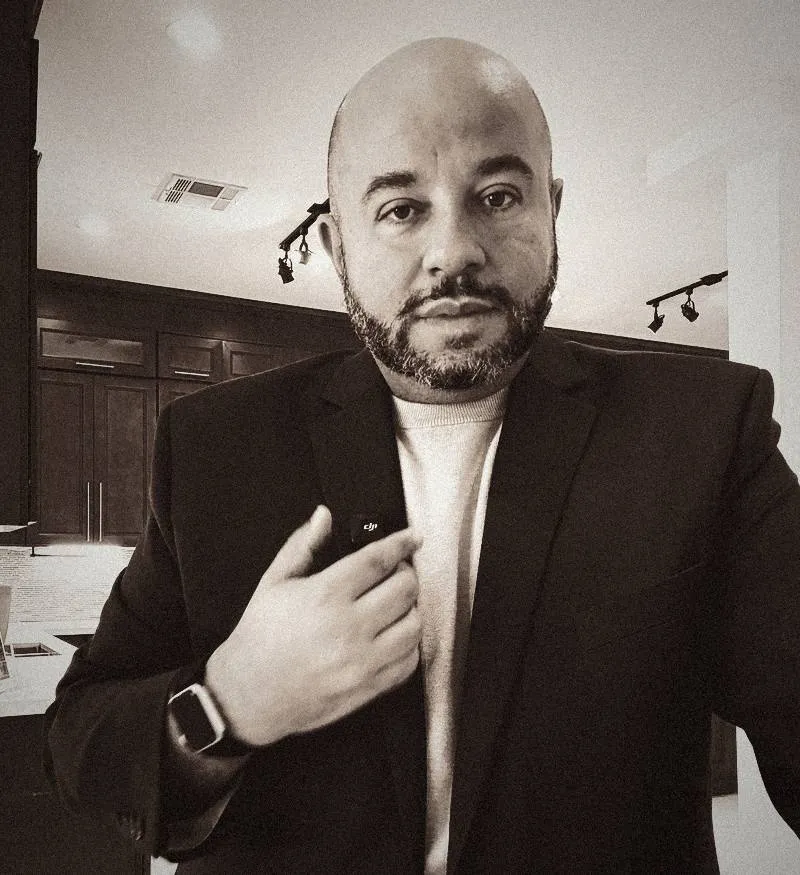 DRE# 02206345 ● Compass
Pasadena local. Certified Probate and Trust Specialist and First Time Homebuyer Specialist.
Whether it’s a sensitive estate sale or a first purchase, my focus is on simplifying the process, protecting value, and delivering a smooth path to closing.
Pasadena local with a strong understanding of the neighborhoods, architecture, and lifestyle that make this area unique. I regularly spend time at local favorites like Descanso Gardens and the Los Angeles County Arboretum and Botanic Garden, drawing inspiration from the beauty and design of the region.
 Fig. 01
 Fig. 02
 Fig. 03
Certified specialist
Homebuyer specialist
Specializing in both Probate and Trust real estate as well as guiding first-time homebuyers, I bring a calm, clear, and practical approach to every transaction. Certified in Probate and Trust, with over 16 years of experience in the finance industry, I help clients navigate complex decisions, understand their options, and move forward with confidence. Whether it’s a sensitive estate sale or a first purchase, my focus is on simplifying the process, protecting value, and delivering a smooth path to closing.
A city built on Arts and Crafts craftsmanship was primed for the warm, wood-and-glass modernism of the 1950s.
Read story →The structural idea behind Pasadena’s open plans, exposed ceilings and walls of glass.
Read story →A hillside in southwest Pasadena holds one of Southern California’s finest clusters of midcentury homes.
Read story →Glass walls, built-ins and courtyard plans: how Pasadena architects dissolved the line between room and garden.
Read story →In 1963 a Pasadena museum staged Marcel Duchamp’s first U.S. museum retrospective. It still teaches us something about the modern room.
Read story →Since 1968 the Rose Bowl Flea Market has been the place to find the real thing.
Read story →From a Rose Parade department store to Getty-backed home tours, where to go and how Pasadena came to protect its modern past.
Read story →A city built on Arts and Crafts craftsmanship was primed for the warm, wood-and-glass modernism of the 1950s.
Pasadena had a head start. Long before the postwar boom, the city was devoted to Arts and Crafts: honest materials, visible joinery and houses that sat comfortably in the landscape. When modernism arrived in the 1940s and ’50s, local architects didn’t swap that heritage for cool steel and stark white boxes. They stretched it.
Preservation records describe a Pasadena brand of modernism built on wood framing and natural materials, with careful detailing, built-in furniture and a strong link between inside and out. That’s why a Pasadena midcentury house tends to feel warm rather than clinical, and why the style has aged so gracefully here.
Sources: Cultural Resources of the Recent Past, City of Pasadena (National Register multiple property documentation).
The structural idea behind Pasadena’s open plans, exposed ceilings and walls of glass.
Post-and-beam is simple: vertical posts carry horizontal beams, so walls stop doing structural work. That frees an architect to swap wall for glass, run ceilings on one clean plane and let a room spill toward the garden. At midcentury it was also affordable, because the repeating grid kept framing straightforward.
Pasadena became a showcase. Many local architects followed the post-and-beam approach favoured at the USC School of Architecture, and Buff, Straub & Hensman, a firm with deep USC roots, turned it into a regional signature.
Sources: LA Conservancy, Wirick House and Buff, Straub & Hensman.
A hillside in southwest Pasadena holds one of Southern California’s finest clusters of midcentury homes.
Tucked into the San Rafael hills, the Poppy Peak Historic District covers roughly twelve acres and just three streets. Yet it holds custom homes by Buff, Straub & Hensman, Richard Neutra, James Pulliam, Kenneth Nishimoto, Lyman Ennis and Leland Evison. Nearly every house was designed one at a time, for one family, and the variety is the point.
Some step down the slope in staggered volumes, some pinwheel around a courtyard, some stretch long and low. They share the same ingredients: timber, glass and views.
Sources: National Register nomination for Poppy Peak; LA Conservancy; City of Pasadena.
Glass walls, built-ins and courtyard plans: how Pasadena architects dissolved the line between room and garden.
Walk through a Pasadena midcentury and you’re rarely far from a view. Floor-to-ceiling glass, sliding doors and low rooflines pull the garden into the plan, while deep eaves keep the California sun in check.
The local approach also leaned on built-in furniture: benches, shelving and storage designed with the architecture, so rooms stay calm and uncluttered. It’s a lesson that travels to any home. Fewer loose pieces, better ones, and a clear sightline from the front door to the greenery beyond.
Sources: Cultural Resources of the Recent Past, City of Pasadena.
In 1963 a Pasadena museum staged Marcel Duchamp’s first U.S. museum retrospective. It still teaches us something about the modern room.
In October 1963 the Pasadena Art Museum opened a retrospective of Marcel Duchamp, organised by the young curator Walter Hopps. Duchamp travelled to town for it, and the show ran into early November. It’s remembered as a turning point for Los Angeles art.
Why does it matter to a design journal? Because the midcentury home was always meant to hold art. Pasadena’s pale walls, generous glass and calm palettes made perfect galleries for a single bold object.
Sources: Gagosian Quarterly; L’Œil de la Photographie; Pasadena Art Museum collection records.
Since 1968 the Rose Bowl Flea Market has been the place to find the real thing.
On November 10, 1968, promoters R.G. Canning and Bill Tunnell opened a flea market in the Rose Bowl parking lot with around 200 vendors and roughly 12,000 visitors. The city wanted extra income and the stadium had space to spare. Today it’s a second-Sunday ritual with about 2,500 vendors.
Longtime shoppers know the market by colour: the Orange section is where vintage furniture, paintings and rugs gather. Arrive early, measure your space before you go, and check the bones: solid joinery, original finish, legs that haven’t wobbled loose.
Sources: Pasadena Now; R.G. Canning Enterprises.
From a Rose Parade department store to Getty-backed home tours, where to go and how Pasadena came to protect its modern past.
Midcentury Pasadena wasn’t only houses. At 777 E. Colorado Boulevard, a former Robinson’s department store was planned for the affluent postwar shopper, with the building sited to include prime Rose Parade viewing spots. It later became a Robinsons-May and, in 1993, Target’s first multilevel store.
Preservation caught up with the style fairly recently. The city commissioned a Modern Resources historic context statement, described as its first comprehensive look at its modern buildings, and Pasadena Heritage has run tours such as 1940 Forward.
Sources: LA Conservancy; Pasadena Heritage; Historic Resources Group.